- Share
-

-

-

-

-

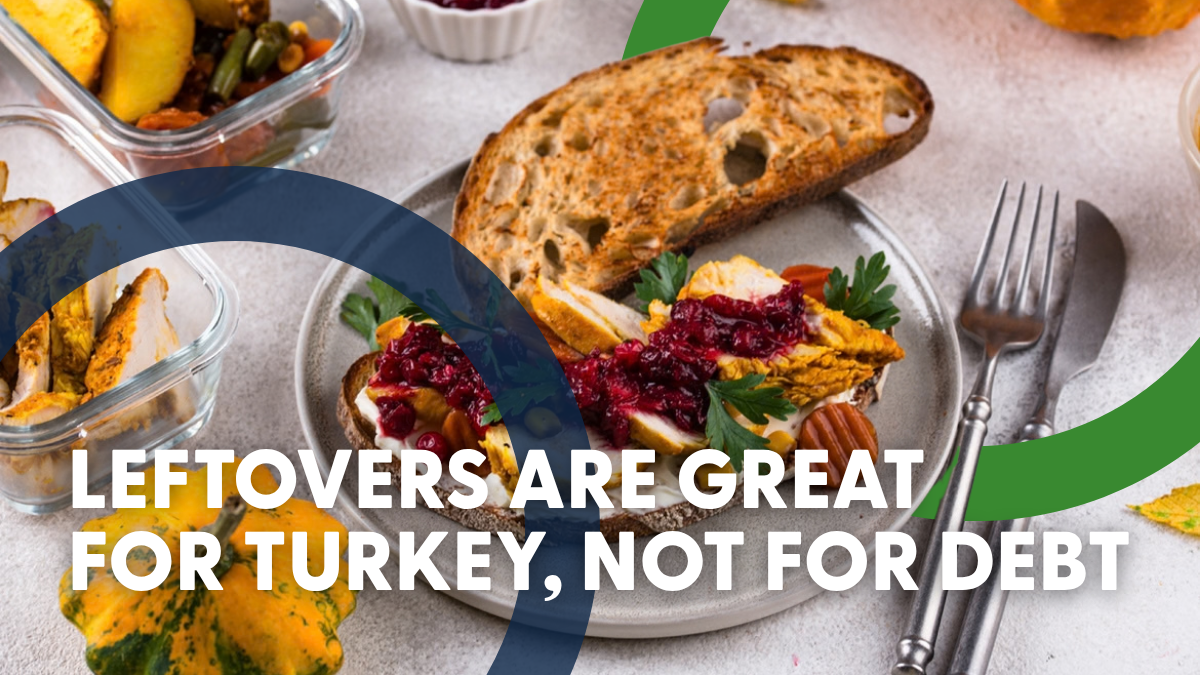
November 22, 2026Leftovers are Great for Turkey, Not for Debt
The table’s been cleared, the football game is on, and the fridge is packed with leftovers. Thanksgiving may be over, but tomorrow’s turkey sandwiches are something to look forward to. There’s comfort in those leftovers – they stretch your feast a little further, make lunch easy, and remind you of the holiday fun.
But while Thanksgiving leftovers are something to savor, financial leftovers like high-interest debt aren’t nearly as satisfying. If you’ve been carrying credit card balances from one month to the next, it might be time to clear your financial plate. Here’s how to keep leftover debt from spoiling your budget before the new year.
When Debt Keeps “Reheating” with Interest
Turkey reheats well. Debt doesn’t.
Every time you carry a balance on a credit card, interest piles on – and that leftover balance grows a little larger. Like overcooked leftovers, it loses its flavor fast.
Example:
If you owe $1,000 on a credit card with a 20% APR and only make minimum payments, you could pay around $200 in interest over the course of a year. That’s money that could have gone toward your savings, travel plans, or next year’s holiday celebration.
When you “reheat” debt month after month, you’re not getting anything new in return – just paying the same balance repeatedly.
Tips to Get Ahead on Credit Card Debt:
- Pay more than the minimum balance each month.
- Apply windfalls, like tax refunds or end-of-year bonuses, toward your highest-interest debt.
- Avoid adding new charges to existing balances while paying them down.
Small changes like these can break the cycle and prevent your debt from continually reheating.
Debt Consolidation: The Clean-Plate Solution
After Thanksgiving dinner, clearing the table can feel like a chore – but it’s also satisfying. Once everything’s put away, you can finally relax. Debt consolidation works the same way. It’s the financial equivalent of starting fresh with a clean plate.
Consolidating multiple high-interest balances into one lower-rate loan makes repayment simpler and less stressful. You’ll have one predictable payment, one due date, and a clear path to becoming debt-free.
Why Debt Consolidation Works:
- Simplifies your finances: Combines multiple credit card or loan payments into a single, manageable monthly payment.
- Reduces total interest paid: Transferring high-interest balances to a lower-rate loan will instantly reduce your interest payments.
- Creates a payoff plan: With a defined loan term, you’ll know exactly when you’ll be finished – no revolving balance that lingers indefinitely.
It’s like wiping down the counters and putting the dishes away – once the clutter is gone, you can breathe easier and enjoy the season without financial stress hanging over you.
Debt Consolidation Options:
- Debt Consolidation Loans: Roll multiple balances into a single, lower-rate personal loan. With a set payoff date and fixed rates, you’ll eliminate the balances quicker and pay less interest. Check out PEFCU’s personal loan options at PEFCU.com.
- Credit Card Balance Transfers: Move your higher-rate credit card balances to a lower-rate credit union card. Your monthly interest charges will decrease immediately. PEFCU offers several low-rate credit card options. Learn more and apply at PEFCU.com.
Consolidating debt before the holidays can help reduce financial stress and set you up to start the new year on solid ground.
Personal Loans with Fixed Payments: A Recipe for Success
A personal loan with fixed payments is like portioning out your leftovers – you know exactly how much is on your plate and when you’ll be finished. Unlike credit cards, which allow balances to roll over and interest to compound, these loans come with clear terms, predictable payments, and a built-in finish line.
How Personal Loans Help Eliminate Debt Faster:
- Predictable monthly payments: You’ll always know how much you need to budget each month.
- Defined end date: A clear payoff timeline lets you see the finish line from the start.
- Stable rates: Fixed rates stay the same for the life of the loan, giving you peace of mind even when credit card rates fluctuate.
Once the loan is paid off, it’s done – no revolving balance, no leftover interest, no endless reheating. It’s a complete, satisfying finish.
That’s what makes debt consolidation and personal loans such powerful tools. They simplify repayment and replace uncertainty with confidence. You’ll move from feeling weighed down by “leftovers” to feeling organized, in control, and ready for a fresh start in the new year.
Smart Ways to Avoid New “Leftovers”
While paying down debt is important, avoiding new debt is just as crucial. The holidays are full of spending temptations, but staying intentional helps prevent those leftovers from returning next season.
Quick Tips to Try:
- Set a holiday budget early: Break your holiday budget into categories and decide how much you’ll spend on gifts, food, and travel – then stick to it.
- Use a separate account for seasonal expenses: One of the easiest and most effective ways to manage holiday expenses is by opening a separate account. You can quickly track how much you’ve spent and avoid accidentally spending money earmarked for bills and loan payments.
- Plan for next year now: Set up a Holiday Savings Account at the credit union so you can save a little each month for next season’s celebrations.
Keeping your spending organized now makes it easier to enjoy the festivities without creating new debt to “reheat” later.
We’re Here to Help!
Thanksgiving leftovers may be a treat, but leftover debt can leave a bad taste long after the holidays. Fortunately, you don’t have to carry it into the new year. By consolidating high-interest balances now, you can clear your financial plate and start fresh.
If you want to learn more about debt consolidation and how it can immediately save you money, we’re happy to help. Please stop by any of our convenient branch locations or call 800-226-6673 to speak with a Member Advocate today.
Each individual’s financial situation is unique and readers are encouraged to contact PEFCU when seeking financial advice on the products and services discussed. This article is for educational purposes only; the authors assume no legal responsibility for the completeness or accuracy of the contents.