

- Share
-

-

-

-

-

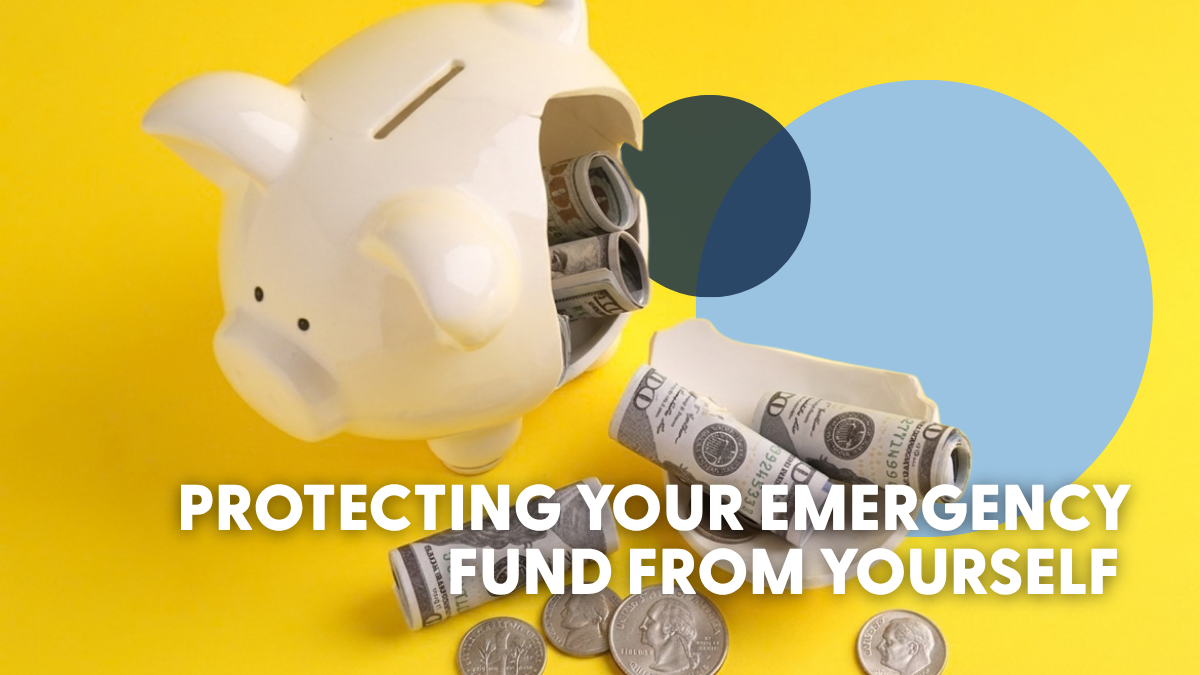
November 1, 2026Protecting Your Emergency Fund from Yourself
Building an emergency fund takes work. You might spend months automatically transferring money from every paycheck, cutting back on a few purchases, or putting extra income into savings until $500 becomes $2,500 or even $5,000.
Then a different challenge begins – keeping that money there until you actually need it. When your regular budget gets tight, it’s easy to think, “I’ll just take $100 and replace it next payday.” One withdrawal may not seem significant, but repeated often enough, the account meant to protect you from emergencies can slowly become a piggy bank.
While building an emergency fund creates financial protection, learning when not to use it helps you keep that protection. In this article, we’ll reveal ways to protect your emergency fund from yourself.
When Everything Starts Feeling Like an Emergency
The definition of an emergency can gradually expand when hundreds or thousands of dollars are sitting within easy reach.
A major car repair, urgent home repair, unexpected medical bill, or temporary loss of income is usually why you built the fund. A last-minute trip, holiday spending, routine car maintenance, or a month when entertainment spending ran high can also create financial pressure, but they’re different kinds of expenses.
An expense doesn’t become an emergency simply because there isn’t enough money left in this month’s budget to cover it.
There’s also an important difference between “unexpected” and “unbudgeted.” The holiday season arrives every year. Cars need routine maintenance. Weddings, vacations, and seasonal expenses may not occur every month, but many can be anticipated.
Preparing separately for predictable expenses makes it easier to protect emergency savings for the financial curveballs you couldn’t see coming.
Give an Emergency a Simple Test
You don’t need an exhaustive list defining what qualifies as an emergency. Real life is too complicated for that. Instead, before withdrawing money, ask yourself three questions:
- Is it unexpected? Did something happen that you couldn’t reasonably plan for?
- Is it necessary? Does the expense need to be addressed, or is it something you want?
- Would it be difficult to cover using your normal budget? Can your regular budget absorb the cost without creating another financial problem?
Not every situation will fit perfectly into all three categories. The purpose of the questions is to create a pause between “I have the money” and “I should use the money.”
For example, consider a failed transmission. It’s unexpected, you may need the vehicle to get to work, and a $2,000 repair could be difficult to absorb through a normal month’s budget. Emergency savings may be appropriate.
On the other hand, a weekend trip that wasn’t in the budget may also be unexpected. But that doesn’t necessarily make it an emergency.
Having money available doesn’t always mean you can spend it. If you’ve assigned $5,000 to emergencies, those dollars already have a job.
Borrowing From “Yourself” Isn’t Free
Taking $500 from emergency savings can feel different from borrowing elsewhere. There’s no application, interest rate, credit check, or lender expecting a payment.
There’s just a promise: “I’ll pay myself back.”
Sometimes using available cash instead of taking on high-interest debt may make financial sense. But withdrawing from emergency savings still has a cost – reduced protection.
To illustrate, suppose you have $5,000 saved, and you spend $1,500 on a weekend getaway. Your financial cushion is now $3,500, a 30% reduction. Two weeks later, your vehicle needs a $2,000 repair.
The optional purchase didn’t charge you interest, but it left you with less protection when the expense you actually built the fund for arrived.
When you borrow from your emergency fund, you’re borrowing against your ability to handle whatever happens next.
Repaying yourself can also be surprisingly difficult. A lender sends statements and gives you due dates. Your savings account doesn’t.
You may intend to replace $500 next month, but another expense appears. You put back $200 instead. Then another month passes, and eventually the remaining $300 becomes something you’ll replace “later.”
Emergency funds aren’t always depleted by one major emergency. They can also shrink $100 or $200 at a time.
Your Emergency Fund Won’t Tell You No
Your emergency fund doesn’t have a loan officer. It won’t review your request, check your budget, or ask whether concert tickets really qualify as an emergency.
The money belongs to you, which means you have to become the gatekeeper.
Before transferring it, return to the three questions: Is this unexpected? Is it necessary? Would my regular budget struggle to absorb it?
Then add one more:
What happens if a real emergency occurs next week?
You can also make this easier by establishing a few personal rules before you need them. Decide which situations you would generally consider using emergency savings for and which predictable or optional expenses should be handled elsewhere.
The rules don’t have to be universal or rigid. Their value comes from deciding what your emergency fund means before you’re standing in the middle of a tempting spending decision.
Your emergency fund will never decline your withdrawal. Sometimes you have to be the one who says no.
But Don’t Become Afraid to Use It
Protecting emergency savings can create the opposite problem if you’re not careful.
Imagine you’ve worked for years to build $10,000 in savings. Then, a legitimate $2,500 emergency arrives. Watching that balance fall to $7,500 can feel like watching years of progress disappear, so you consider putting the expense on a high-interest credit card instead.
Remember, your emergency fund isn’t a trophy. You built it so that when a legitimate financial emergency occurs, you have money available.
When you use emergency savings for a real emergency, you aren’t losing progress. It’s the plan working.
That’s the difference between using an emergency fund and raiding one. A legitimate financial curveball followed by a planned withdrawal is very different from repeatedly transferring money because regular spending exceeded the monthly budget.
The withdrawal itself isn’t automatically the problem. What matters is the reason behind it.
After an Emergency, Start Moving Forward Again
Suppose you built an $8,000 emergency fund and a legitimate expense required $2,000. Your balance is now $6,000.
The next goal is straightforward – begin rebuilding.
You might resume automatic transfers, temporarily redirect some discretionary spending, or put a portion of additional income toward the account. If building the original fund took time, rebuilding it may take time too.
Trying to replace several thousand dollars immediately can strain the rest of your budget and potentially create new financial problems. A realistic, consistent rebuilding plan is more useful than one that’s so aggressive you can’t maintain it.
An emergency may knock your savings backward. But your job is simply to start moving it forward again. And since you did it before, you know you can do it again.
We’re Here to Help!
Your emergency fund isn’t extra money. It’s money you’ve already assigned to problems you haven’t met yet. Protect it from predictable or optional spending. When a legitimate financial curveball arrives, use that protection you worked hard to build. Then, rebuild for the next unexpected expense.
If you want to learn more about savings accounts, automatic transfers, or tools that can help separate emergency savings from everyday spending, we’re ready to help. Please stop by any of our convenient branch locations or call 800-226-6673 to speak with a Member Advocate today.
Each individual’s financial situation is unique and readers are encouraged to contact PEFCU when seeking financial advice on the products and services discussed. This article is for educational purposes only; the authors assume no legal responsibility for the completeness or accuracy of the contents.